


Really impressed with this creatine. The powder is extremely fine, mixes quickly without leaving much grit behind, and the unflavored formula makes it easy to add to anything. I also like that it contains just one ingredient and is third-party tested for purity and contaminants. It feels like a well-made, dependable product, and I would buy it again.
CM-01Creatine Monohydrate


(21 reviews)
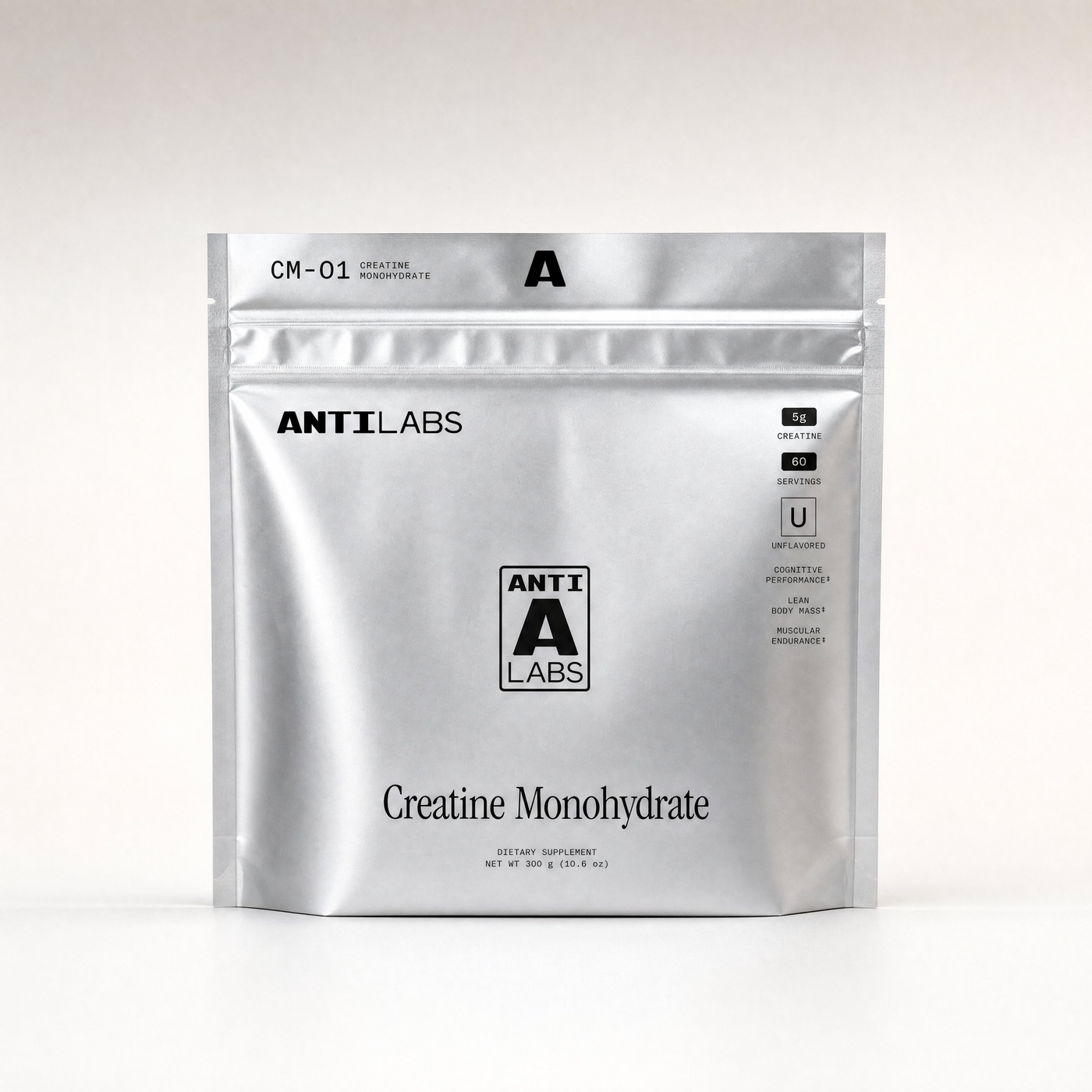
Creatine Monohydrate
$0.49/serving subscribed60 servings
Micronized creatine monohydrate for easy mixing. Unflavored. One ingredient, no exceptions.
- >99.9% pure — re-verified every incoming lot
- Ultrafine micronized powder for exceptional mixability
- Third-party tested for heavy metals and contaminants
- Ships By Next Business Day
- 30-Day Satisfaction Guarantee
Latest batch
Creatine Monohydrate
CM-01
26 MAY 2026
26 MAY 2026
IdentityPass
Heavy MetalsPass
MicrobialPass
5g
Daily
Standard protocol
The clinical default. Muscle saturates in 3–4 weeks; timing doesn't matter.
10g
Daily
Enhanced protocol
Scales cognitive benefit. Best with heavy training; split into two 5 g doses if GI discomfort occurs.
20g
1–5 days
Acute cognitive loading
Short-term, for sleep loss or jet lag. Split across the day.‡
How to take it
Mix 1–2 scoops (5–10 g) with 8–12 oz of water or a shake until dispersed. Unflavored.
Formulated by Aaron Esagoff, MD.
Cleared unanimously by nine independent board physicians — Jan 2026.
Hopkins · Harvard · Stanford · Mayo · UCSF · Penn · GW · Iowa
The record behind it
685+
Randomized human trials
25
Independent meta-analyses
Clinically studied since 1992
Every lot is produced under strict cGMP controls in FDA-registered facilities and tested for identity, heavy metals, and microbial safety before release. Test results are available for each batch.
Finished product is held in temperature-controlled storage and shipped from a climate-controlled facility, in sealed, tamper-evident packaging.
- NSF GMP certified facility
- SQF certified facility
- FDA 21 CFR Part 111 compliant
- Physician-formulated, panel-reviewed
- Third-party tested — every batch
- Clinically studied ingredient
- Creatine carries GRAS status; FSSC 22000–certified source
What's in it
- Creatine monohydrate — 5 g per serving
What's not in it
- No fillers or bulking agents
- No flavors
- No sweeteners
- No dyes or colorants
- No anti-caking agents
- No proprietary blends
- No added sugar
- No gluten, soy, or dairy
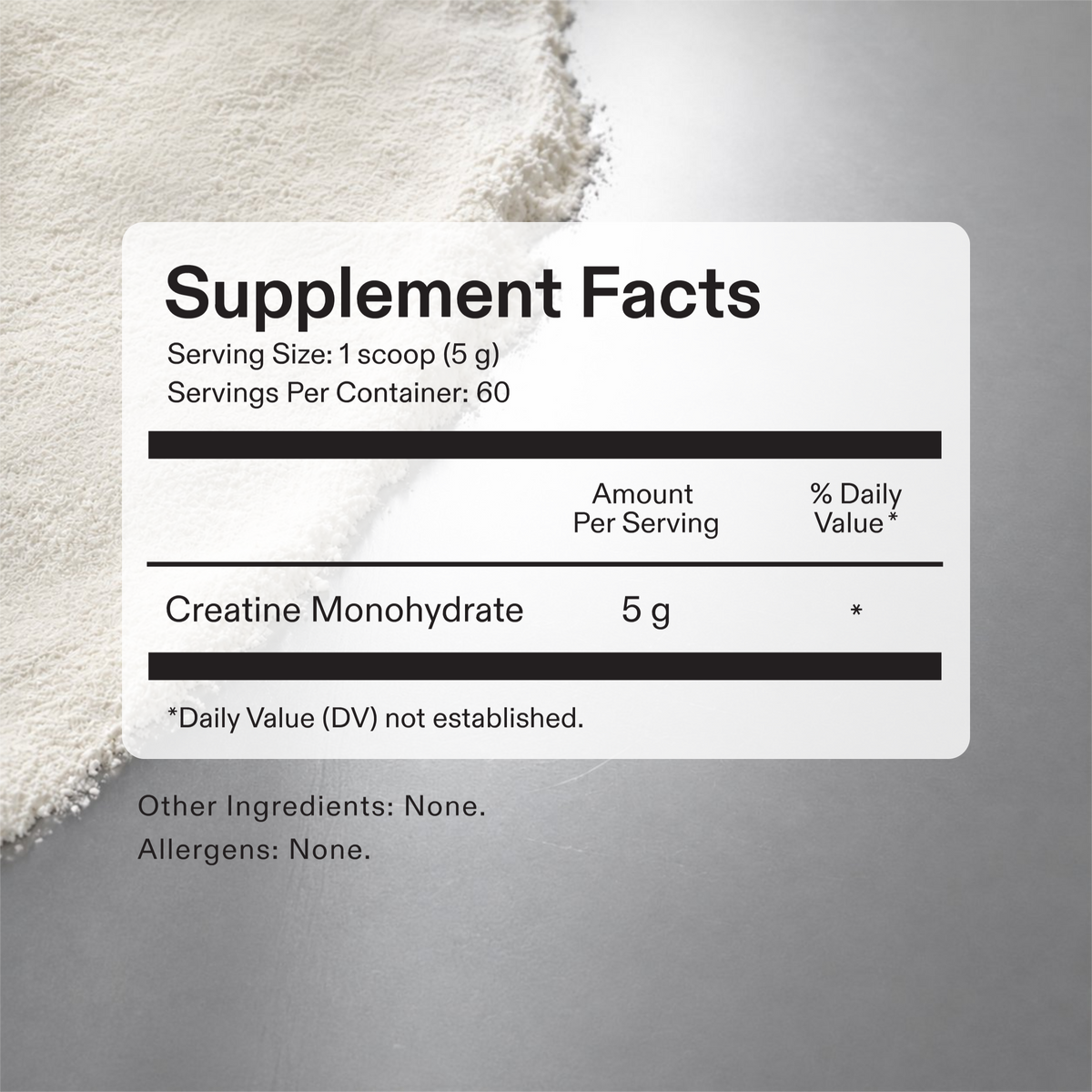
Serving Size: 1 scoop (5 g)
Servings Per Container: 60
| Nutrient | Amount Per Serving | % Daily Value |
|---|---|---|
| Creatine Monohydrate | 5 g | * |
* Daily Value (DV) not established.
Other Ingredients: None.
Allergens: None.
These statements have not been evaluated by the Food and Drug Administration. This product is not intended to diagnose, treat, cure, or prevent any disease.
Formulated by the founder. Signed off by the board.
Johns Hopkins
Harvard Medicine
Stanford Medicine
UCSF
Penn Medicine
Creatine is one of the most studied compounds in sports nutrition, yet it remains underutilized by female athletes. For women, the evidence is clear. It supports explosive output, mental sharpness, and muscular endurance.

The research on creatine has broadened beyond athletes to cognition, bone density, and mood. CM-01 is built around that broader case.

Creatine monohydrate is among the most extensively studied supplements in sports nutrition, though no supplement replaces good nutrition, sleep, and training.

Frequently Asked Questions
Is it safe for my kidneys?
Yes, in healthy adults. It has been studied in trials running as long as five years. One thing worth knowing: creatine nudges serum creatinine up slightly, a breakdown product that can make a routine kidney panel look off without anything being wrong. Tell your physician you supplement so they read the number in context. If you already have kidney disease, talk to them first.
Do I need to load creatine?
No. Take 5 g a day and your muscle stores saturate in three to four weeks. A 20 g/day loading phase gets you there faster but lands in exactly the same place. Long term, the only variable that matters is taking it every day.
Will it cause me to retain water or bloat?
Not in the way most people mean. The early water gain is real: the ISSN's review attributes it primarily to intracellular volume, meaning water drawn into the muscle cell as your stores saturate rather than into the subcutaneous tissue that reads as puffiness. That accounts for the 1–2 kg some people see in the first couple of weeks. Over longer periods the picture is quieter, since several studies find no change in total body water relative to muscle mass, so the extra intracellular water simply tracks the muscle you're carrying. It's part of how creatine works, not a side effect.
Which form is best: monohydrate, HCl, or ethyl ester?
Monohydrate. Head-to-head, HCl came out equivalent: across eight weeks of resistance training it matched monohydrate on strength, hypertrophy, and hormonal response, with no advantage over it. Ethyl ester did worse — it was less effective at raising serum and muscle creatine than monohydrate. Equivalent at best, then, and the premium forms mostly exist to justify a bigger margin. We use creatine monohydrate, the form nearly every major clinical trial has actually run on.
Will creatine make me lose my hair?
No. A 2025 randomized trial measured hair-follicle density and DHT across 12 weeks on creatine and found no difference from placebo. The whole worry traces to a single 2009 study of twenty rugby players that saw a temporary rise in DHT, not hair loss, and even that has never been replicated.
Does creatine cause renal injury?
No. A 2025 systematic review of 21 studies, 12 of them pooled for meta-analysis, found no significant change in GFR or renal function markers from creatine supplementation. Long-term safety has been examined in controlled trials extending to five years. The original concern traces to two late-1990s case reports that have not been substantiated in subsequent prospective trials.
How should we interpret the serum creatinine elevation in supplementing patients?
Serum creatinine rises 10–20% from supplementation itself, a metabolic byproduct of creatine breakdown, not a damage marker. BUN, cystatin C, and the BUN:creatinine ratio remain unchanged, distinguishing supplementation-driven elevation from renal injury. For patients where renal monitoring is clinically important, cystatin-C-based eGFR avoids the creatinine confound.
How do subscriptions work?
Your first subscription order is 25% off (15% on the every-two-months option). Every order after that is 10% off. Subscriptions ship free, automatically, and you can skip, pause, or cancel anytime, for any reason, right from your account.
How should we counsel patients with stage 2–3 CKD?
We default to deferring: discuss with the patient's nephrologist before initiating. The literature in healthy populations doesn't extrapolate cleanly to compromised renal function, and serum creatinine elevations from supplementation can confound monitoring. For stage 1 with stable function and no other risk factors, baseline + 12-week eGFR and cystatin C are reasonable.
What's the sourcing standard and analytical purity for CM-01?
We source micronized creatine monohydrate at >99.9% purity by HPLC. Manufacturing-byproduct specifications include dicyandiamide ≤50 mg/kg, dihydrotriazine <3 mg/kg, and residual creatinine <100 mg/kg. Heavy metals (As, Cd, Pb, Hg) each at <0.1 mg/kg. Every incoming lot is re-verified via third-party ISO 17025 lab, with numerical results published on the lot registry.
What's your return policy?
Every order is covered by a 30-day guarantee. If you're not satisfied, return it within 30 days of delivery for a refund or replacement — for any reason. Full details are in our Refund Policy.
How fast do you ship, and where?
We ship within the United States. Orders ship from our US fulfillment center within 1 business day.
Are your products third-party tested?
Yes — every batch is third-party tested, and you can look up the results by lot.
Where are your products made?
In an NSF- and UL-registered, SQF-certified GMP facility in the US.
How do you decide what to sell?
We review ingredients rigorously and publish our reasoning in the Formulary — we only sell what we'd take ourselves. Of the ingredients we've reviewed, we've rejected 95%.
5.0
★★★★★
★★★★★
Based on 21 reviews
5
4
3
2
1
AI-powered review summary
Customers praised this supplement for its tasteless formula that dissolves easily in beverages. Many noted improvements in muscle endurance and cognitive function. Shoppers appreciated the scientific approach, third-party testing, and quality packaging. Multiple customers ranked it above other premium brands.
Customers Talked About
Pure creatine that I trust. It is flavorless and mixes well.
Awesome product. Feeling stronger, fitter, and fuller since I started using this. All the benefits with none of the fillers and junk that other brands include. Will definitely purchase again or get a subscription.
Clean ingredients, found my creatine to keep!
This is the real deal. Best ingredients make the best product.
Highly recommend.
Great Quality Creatine. Mixes Easily & Works!
What a fantastic product. Everything from the packaging to the quality of the creatine. I take it every day after I work out - it’s now a staple in my everyday supplement routine.
A great flavourless creatine that you can add to any drink. I would highly recommend this product!
best of the best in terms of product quality and purity. I also love how the product is unflavored with no additional sweeteners.
These guys are the real deal. So grateful for the care and quality in every scoop <3
What an amazing product. I was thrilled from the first taste. Will be buying again and recommending!
I've tried many different creatine brands over the years, and this is easily the best I've used. I appreciate that it's a single, clearly labeled ingredient with no fillers. It dissolves completely with no grit at the bottom of the glass, and the flavor is clean without any gross aftertaste. Highly recommend to anyone serious about their supplement intake.
I started the Enhanced Protocol and I'm feeling sharper and clearer every day
As a dentist, I appreciate just how scientific and medical this company is. I appreciate the fact that all their products are tested. Their creatine doesn’t have a taste and mixes so easily. Can’t wait for their next stuff.
Always looking for supplements I can trust. Loved the packaging as well!
I am truly enjoying this creatine so far. I definitely feel a significant boost in muscle endurance and cognitive function. I recommend this product
Top tier creatine. Refreshing to buy from a brand that cares as much as I do about what’s going in my body. Already feeling the benefits from their creatine. Excited to try their other products when they come out
Incredible creatine! I've had Momentus, Thorne, and a few other brands but ANTI Labs beats all of them in taste and feeling. Highly recommend! (Also the bag is cool which is a plus)
This is hands down the best creatine I’ve tried. It dissolves with no taste—I put it in my tea or coffee every morning and even in plain water if I’m doing another 5g at night.
Choose your protocol
Both saturate muscle, the enhanced protocol better targets the brain
The brain takes up creatine more slowly than muscle and sits behind the blood–brain barrier, so raising brain creatine takes more sustained intake than saturating muscle does. That's why research into creatine's cognitive and brain-energy effects leans on higher daily doses — an approach with a long, well-documented safety record in healthy adults. The evidence is still emerging and strongest under mental stress, sleep loss, and fatigue, which is why we make the higher dose our default.
— Aaron Esagoff, MD
Adjust your dose, pause, or cancel anytime
Complete your protocol · Step 2
Finish the stack.
 WP-01
Whey Protein Isolate
25g protein · 5.5g BCAAs / serving
WP-01
Whey Protein Isolate
25g protein · 5.5g BCAAs / serving
Supports
Creatine
+ WP-01
Lean Muscle Mass
Maximal Strength
Muscle Protein Synthesis
Amino Acid Delivery
Satiety

I start every morning with ANTI Labs protein and creatine. It's the highlight of my morning routine.